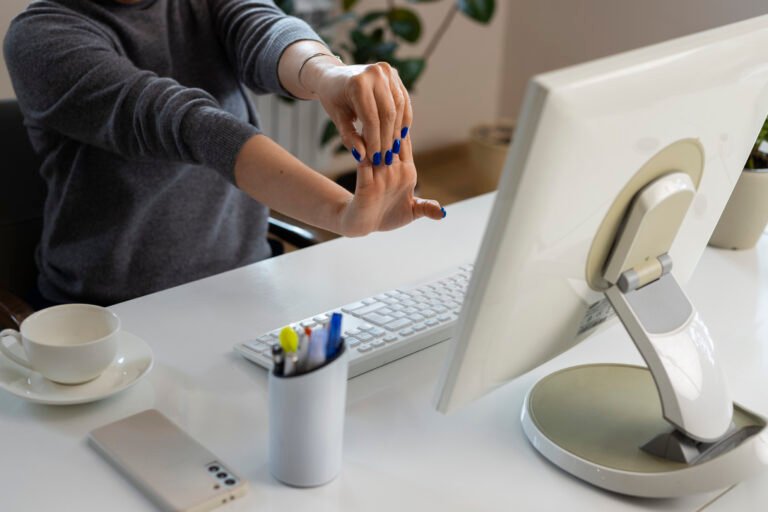
Most of us spend more than eight hours a day in front of screens — and yet very few people are aware of the real impact this has on their sleep, concentration, and long-term eye health.
Blue light emitted by digital devices is one of the most overlooked factors affecting wellbeing in the modern workplace.
Smartphones, laptops, tablets and televisions all emit significant amounts of artificial blue light that, particularly during evening hours, can profoundly disrupt the body’s natural rhythms.
Understanding how this process works — and what you can do to protect yourself — is the first step towards better rest, sharper focus, and improved performance at work.
In this article, you’ll find a comprehensive guide covering the documented effects of blue light on visual health, the most common symptoms of digital eye strain, and the most effective solutions currently available — so you can protect your sight without compromising on style.
How blue light affects your sleep and concentration
Not all light is equal. Blue-violet light, with wavelengths between 380 and 455 nm, has the greatest influence on the body’s biological clock. The problem arises when this light comes from artificial sources — such as the LED screens of our devices — during the evening hours, precisely when the body should be winding down and preparing for sleep.
The most commonly reported effects of prolonged exposure to artificial blue light include:
- difficulty falling asleep and poorer quality of rest at night
- digital eye strain, also known as Computer Vision Syndrome (CVS)
- dry, irritated eyes after extended screen use
- recurring headaches linked to prolonged device use
- reduced concentration and afternoon productivity slumps
- disruption to the circadian rhythm with knock-on effects on mood and energy levels
These symptoms are frequently attributed to general stress or tiredness. In reality, however, they can improve significantly by adopting a few straightforward habits and choosing the right tools to support your visual health.
Blue light and remote working: the invisible problem for home workers
With the widespread adoption of remote working across the UK, daily screen time has risen considerably. Those who work from home tend to use several devices simultaneously — laptop, smartphone and tablet — often in environments lit by LED lighting, which multiplies blue light exposure across consecutive hours.
Furthermore, unlike office workers, those working from home often take fewer screen breaks, which can worsen the symptoms of digital eye strain. As a result, eye fatigue tends to be more intense, sleep quality suffers, and productivity declines more noticeably throughout the day.
Did you know? According to data from the optical sector, blue light emitted by digital devices can reach the retina for more than 10 hours during a typical working day. Lenses with a specific filter are currently one of the most effective solutions for reducing this type of exposure.
Visual ergonomics at work: practical tips to cut screen fatigue
Beyond specialist eyewear, there are several practical adjustments that can meaningfully reduce the impact of blue light during working hours.
Adjust the brightness and colour temperature of your screens
Reducing screen brightness in the evening and enabling the “warm light” or “night mode” setting available on most modern devices is a simple and cost-free first step. This adjustment reduces the amount of blue light emitted, making device use less disruptive to your natural sleep pattern.
Follow the 20-20-20 rule
Every 20 minutes of screen use, look at a point approximately six metres away for at least 20 seconds. This technique, widely recommended by vision specialists, helps to reduce ocular muscle fatigue and prevent the dry eyes that so commonly affect those who work at a screen all day.
Manage ambient lighting in your workspace
Natural or artificial light should ideally come from the side relative to your screen — never directly in front or behind. Reflections on the monitor are one of the most frequent causes of eye strain for remote workers. Adjustable blinds or curtain filters are a simple solution for managing natural light without darkening the room entirely.
The best solutions to protect your eyes from blue light
The optical market now offers a wide range of solutions for those looking to protect their eyes from blue light. Below are some of the most well-regarded options for those who spend long hours in front of screens.
| Solution | Filter type | UV protection | Best for | Style rating |
|---|---|---|---|---|
| Ray-Ban® Blue-Violet Filter | Lens treatment | ✔ Full | Daily use and work | ⭐⭐⭐⭐⭐ |
| Ray-Ban® Everglasses | Photochromic lens | ✔ Full | Indoors and outdoors | ⭐⭐⭐⭐⭐ |
| Specsavers Screen Protection | Anti-reflection treatment | ✔ Partial | Heavy screen use | ⭐⭐⭐⭐ |
| Specsavers SuperDigital Varifocal | Progressive digital lens | ✔ Partial | Multi-device users | ⭐⭐⭐⭐ |
| Night Mode (software) | Screen filter | ✘ None | Evening screen use | ⭐⭐ |
Ray-Ban® Blue-Violet Filter
Filter: Lens treatment
UV: ✔ Full
Style: ⭐⭐⭐⭐⭐
Ray-Ban® Everglasses
Filter: Photochromic lens
UV: ✔ Full
Style: ⭐⭐⭐⭐⭐
Specsavers Screen Protection
Filter: Anti-reflection treatment
UV: ✔ Partial
Style: ⭐⭐⭐⭐
Specsavers SuperDigital Varifocal
Filter: Progressive digital lens
UV: ✔ Partial
Style: ⭐⭐⭐⭐
Night Mode (software)
Filter: Screen filter
UV: ✘ None
Style: ⭐⭐
The benefits of wearing blue light glasses in your working day
Incorporating blue light filtering glasses into your daily routine can have a meaningful positive impact on several aspects of wellbeing. Beyond direct eye protection, moreover, many users report improvements in sleep quality, greater ease of concentration during work, and a noticeable reduction in eye fatigue by the end of the day.
Unlike software solutions such as screen filters, lenses with an integrated filter offer consistent protection throughout the entire day, regardless of which device you’re using or the ambient lighting conditions in your workspace. Consequently, they represent a more comprehensive and reliable approach to managing blue light exposure.
Frequently asked questions about blue light, eyes and screens
What is blue light and where does it come from?
Blue light is a portion of the visible light spectrum with wavelengths between 380 and 500 nm. It comes primarily from the sun, but also from artificial sources such as the LED screens of smartphones, computers, tablets and televisions, as well as energy-saving light bulbs.
Does blue light actually damage your eyes?
Prolonged exposure to artificial blue light — particularly during evening hours — is associated with digital eye strain, difficulty falling asleep, and potential long-term effects on retinal health. That said, not all blue light is harmful: natural blue light from the sun has beneficial effects on mood and the circadian rhythm.
Do blue light glasses actually work?
Quality blue light filtering lenses do effectively reduce exposure to harmful blue-violet light. Furthermore, many users report reduced eye fatigue and improved sleep quality after several weeks of regular use, particularly when worn during evening screen sessions.
Can I get blue light glasses with a prescription?
Yes. Blue light filtering lenses are available with any type of vision correction: single vision, bifocal and varifocal. They can be fitted into any frame, including those from leading eyewear brands.
Is night mode on my phone enough to protect my eyes?
Night mode reduces the amount of blue light emitted by the screen, but it offers no UV protection and does not filter blue light from other ambient sources. Blue light filtering glasses, by contrast, offer far more comprehensive and consistent protection throughout the day.
How much do blue light glasses cost in the UK?
The cost varies depending on the frame and lens type. Entry-level options are available from around £20–£30, while quality lenses from established optical brands typically start from £80–£120. In the long run, however, the investment tends to pay for itself when you factor in the benefits to visual health and workplace productivity.
Who should wear blue light glasses?
Anyone who spends more than four hours a day in front of a screen can benefit from blue light filtering lenses. They are particularly recommended for remote workers, students, gamers, and those who regularly use smartphones or tablets during the evening hours.
Do children need blue light glasses?
Children are potentially more vulnerable to the effects of blue light, as the crystalline lens in developing eyes filters this wavelength less effectively than in adults. Additionally, with the growing use of digital devices in education, protective lenses may be a worthwhile preventive measure — though it’s always best to discuss this with an optometrist first.
How long does it take to notice the benefits of blue light glasses?
Most people notice a reduction in eye fatigue within the first few days of use. Improvements in sleep quality, on the other hand, typically become apparent after one to two weeks of regular wear — particularly when the glasses are used consistently during evening screen sessions.
Do blue light glasses distort colours?
Modern lenses with a blue light filter integrated into the lens material generate very little reflection and barely alter colour perception. Traditional surface-treated lenses may produce a slight bluish tint on the front of the lens, though this does not affect the visual experience for the wearer.
Can I buy blue light glasses without a prescription?
Yes. Non-prescription blue light glasses (also known as zero power) can be purchased without a prescription, either online or in-store at an optician. For those with a vision prescription, however, you will need to provide an up-to-date prescription from a registered optometrist.
What is the difference between photochromic lenses and blue light lenses?
Photochromic lenses automatically darken when exposed to UV light outdoors and are particularly useful for those who move frequently between indoor and outdoor environments. Blue light lenses, by contrast, are specifically designed to filter out the blue-violet light emitted by digital screens. Lenses that combine both technologies are also available, offering comprehensive protection in any situation.