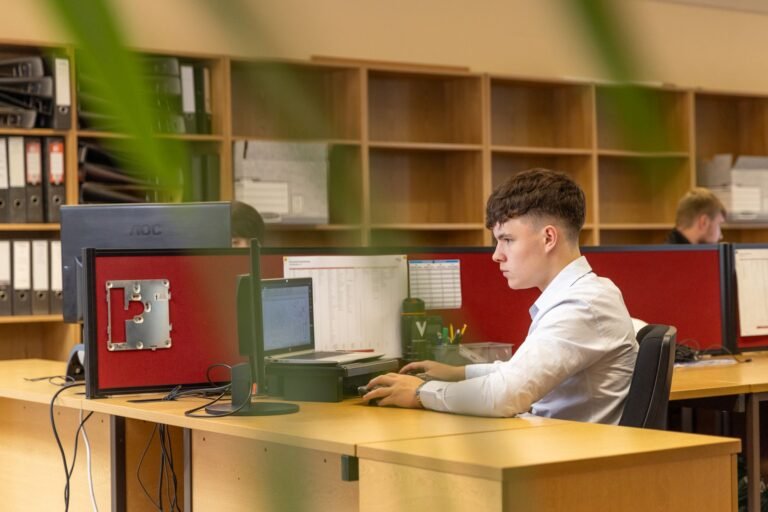
How to Ace the Interview
According to 2026 hiring data, 33% of hiring managers form a firm impression of a candidate within the first 90 seconds of an interview. Furthermore, prepared candidates are three times more likely to receive a job offer compared to those who walk in without a clear plan.
As a result, the work you put in before the interview often matters more than anything you say once you are sitting in the room — or logged onto the call.
Why Preparation Matters More Than Talent
Most candidates lose the job before they even speak — not from lack of skill, but from lack of structure and research
The numbers behind first impressions
Interviews can feel like the most nerve-wracking part of job hunting, but the data suggests the outcome is rarely down to luck. Furthermore, 47% of candidates are rejected simply because they do not know enough about the company they applied to. Therefore, this single gap — basic research — accounts for a huge share of missed opportunities that have nothing to do with someone’s actual ability to do the job.
Virtual interviews are now the norm
According to recent SHRM research, 68% of first-round interviews now take place virtually rather than face to face. Consequently, candidates need to feel just as confident on a video call as they would sitting across a desk from someone. Moreover, virtual interviews come with their own specific challenges — connection issues, lighting, and reading body language through a screen — all of which reward candidates who prepare their setup in advance rather than assuming it will simply work on the day.
What employers are really evaluating
Employers across the country are looking for candidates who not only have the right skills, but who also understand the role, the company, and how to communicate value under pressure. Additionally, around 70% of employers now value soft skills as highly as formal qualifications during the interview itself. Therefore, how you communicate often carries as much weight as what you have done in previous roles.
- National Careers Service — Interview Advice — Official UK government guidance on interview preparation and structuring strong answers
Research the Company Before You Walk In
If you only do one thing before your interview, make it this — learn about the company you’re applying to
Where to look
The easiest way to stand out is to speak the company’s language and align yourself with their values, goals, and tone. Furthermore, spending just 20 minutes on the employer’s website before any interview can reveal how many locations they have, what they sell or do, and any recent news worth mentioning. Additionally, reviewing employee posts on LinkedIn helps you understand the team culture and tone you will likely encounter on the day.
Using salary and review platforms wisely
Sites that publish salary insights and interview experiences from past applicants can give you a far more honest picture of a company than its own marketing material. Moreover, checking a company’s official registration and financial history can also be useful, particularly for smaller or less well-known employers, since it reassures you the business is genuinely established. Consequently, this research takes relatively little time but consistently separates well-prepared candidates from the rest.
Turning research into a talking point
Look at the company’s latest blog post, LinkedIn update, or press release, and mention it naturally during the interview. This single habit shows genuine interest and extra effort, and it is one of the simplest ways to differentiate yourself from candidates who clearly did not look beyond the job advert itself.
- Indeed Career Advice — The STAR Interview Method — Detailed breakdown of how to structure behavioural interview answers with real examples
Master the STAR Method
Situation, Task, Action, Result — the simplest, most reliable way to answer behavioural interview questions
How the structure works
Most candidates stumble not because they lack experience, but because they don’t know how to phrase it clearly under pressure. Therefore, the STAR method gives every answer a simple shape: describe the Situation briefly, explain the Task that was specifically yours, walk through the Action you personally took, and finish with the Result. Furthermore, the Action section should make up the largest part of your answer, since interviewers want to understand exactly what you did rather than what your team did in general.
Why specific examples beat general claims
A weak answer sounds something like “I’m pretty good at working under pressure and I usually just get things done.” A strong answer, by contrast, names a real situation, a real action, and a measurable result — for example, redesigning a process after results dropped and quantifying exactly how much things improved afterwards. Consequently, even a small number can transform a vague answer into a memorable, credible one.
You don’t need years of experience to use it
If you’re newer to the workforce and don’t have a long professional history to draw from, examples from school projects, volunteering, sports teams, or family responsibilities all count. Employers care about what the experience demonstrates, not where it happened. Moreover, preparing four or five flexible stories in advance — covering teamwork, problem-solving, pressure, and conflict — means you can adapt almost any question on the spot, since most behavioural questions map onto one of these core themes regardless of exact wording.
- The Interview Guys — Complete STAR Method Guide (2026) — In-depth examples and delivery tips for using STAR across in-person, phone, and video interviews
Questions You’re Likely to Be Asked in 2026
Most interviews follow a predictable pattern — and one increasingly common 2026 question catches candidates off guard
The classics you should always expect
Almost every interview includes a version of “tell me about yourself,” a question about why you want the role, and at least one behavioural question asking you to describe a time you faced a challenge. Furthermore, interviewers frequently ask how you handle pressure, how you’ve dealt with conflict, and what you consider your biggest strength or weakness. Therefore, preparing solid, honest answers to these core questions covers the vast majority of what you will actually be asked.
The new question: comfort with AI and technology
In 2026, roughly 70% of employers now informally assess a candidate’s comfort working alongside AI tools and modern technology, even when this is not explicitly listed in the job description. Moreover, you don’t need a technical background to answer this well — a short, honest example of using any digital tool to work more efficiently is usually enough to demonstrate adaptability. Consequently, having even one small example ready avoids being caught off guard by this increasingly common question.
Questions about your future with the company
Employers often ask where you see yourself in a year or two, partly to assess whether you view the role as a genuine opportunity or simply a temporary stop. Therefore, align your ambitions with realistic progression within the company — for example, expressing interest in becoming fully trained and growing into more responsibility — rather than vague, unrelated goals. This keeps your answer both honest and reassuring to the person hiring you.
- National Careers Service — Common Interview Questions and Answers — Official UK guidance covering the most frequently asked interview questions
Practical Details: Dress, Timing & Remote Setup
Strong answers can still be undermined by poor preparation around the practical, everyday details
Timing and punctuality
Arriving late can undo all your hard preparation and leave a poor impression before you’ve even spoken. Therefore, use a journey planner to estimate travel time and add fifteen to twenty minutes for unexpected delays. Furthermore, check for transport disruptions on the day itself, and have the interview address and a contact phone number saved in case anything changes at the last minute.
What to bring and what to wear
Bring multiple printed copies of your CV on quality paper, along with a notebook and pen. Moreover, the right dress code depends heavily on the company culture and the role itself — corporate and finance positions still favour tailored, neutral clothing, while creative, tech, and many entry-level roles lean toward smart casual. When in doubt, dressing one level smarter than the role typically requires remains the safest default.
Setting up for a remote interview
For remote interviews, dress smartly from the waist up at minimum and choose plain colours over distracting patterns. Furthermore, ensure your background is tidy and well-lit, and pay attention to personal grooming just as you would for an in-person meeting. Additionally, look at the camera rather than the screen when delivering important answers, since this creates a stronger sense of genuine eye contact for the person on the other end of the call.
- UK RoiSaude — Job Opportunities & Career Resources — Browse current vacancies and additional career advice to support your job search
Preparation Checklist: In-Person vs Virtual
A quick side-by-side reference for what to prioritise depending on your interview format
Why the checklist differs by format
While the core preparation — research, STAR examples, and practising out loud — stays the same regardless of format, the practical details shift depending on whether your interview happens in person or over video. Therefore, reviewing both columns below ensures you don’t overlook something specific to your particular interview type. Confidence grows with repetition, so the more you rehearse using this structure, the more natural your delivery will feel on the day itself.
| Preparation Area | In-Person Interview | Virtual Interview |
|---|---|---|
| Company Research | Review website, recent news, values | Same — plus check video platform used |
| Logistics | Plan route, add 15–20 min buffer | Test camera, mic & internet beforehand |
| Appearance | Full outfit appropriate to role | Smart from the waist up, plain colours |
| Materials | Printed CV, notebook, pen | Notes nearby, CV open on second screen |
| Delivery Tip | Maintain natural eye contact | Look at camera, not the screen |
Company Research
In-Person: Review website, recent news, values
Virtual: Same — plus check video platform used
Logistics
In-Person: Plan route, add 15–20 min buffer
Virtual: Test camera, mic & internet beforehand
Appearance
In-Person: Full outfit appropriate to role
Virtual: Smart from the waist up, plain colours
Delivery Tip
In-Person: Maintain natural eye contact
Virtual: Look at camera, not the screen